SC CTSI-led educational workshops make a difference in the lives of high school students
SC CTSI faculty and staff lead interactive workshops to inspire the next generation of clinical and translational workforce.
Raising awareness about careers in biomedical research and science more broadly can attract more people to the field. Ideally, this exposure should start early – as early as high school, in some cases. Fortunately for the Southern California Clinical and Translational Science Institute (SC CTSI), an opportunity to do so is right in their backyard.
Francisco Bravo Medical Magnet High School is located near the University of Southern California’s Health Sciences campus and serves a wide variety of students, many of whom go on to attend top colleges and pursue careers in STEM fields. The SC CTSI conducts several workshops yearly on topics relevant to clinical and translational science and biomedical research to expose the next generation of learners to the variety of careers in these fields.
“Our CTSI faculty and staff look forward to being a part of this workshop series each year,” said Lindsay Slay, senior programs manager at the SC CTSI. “The students are always highly engaged and enthusiastic about learning more about clinical research and exploring career paths in the field.”
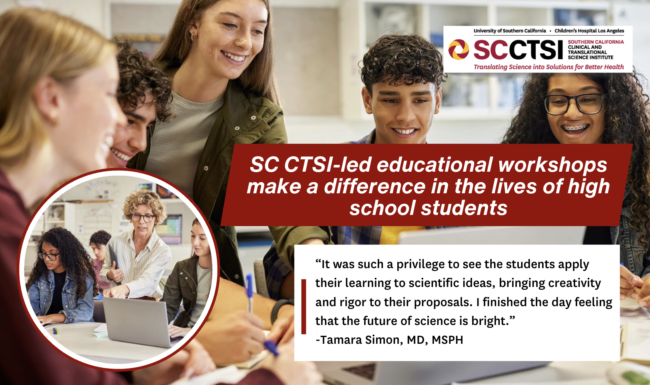
In 2025, they held seven workshops that reached 41 high school students, on topics such as basics of clinical and translational research, research ethics, workplace professionalism, and careers in clinical and translational research. The workshops were led by CTSI and USC faculty, staff, and scholars who shared their experiences and knowledge. The workshop series culminated in a day of proposal writing and pitches, in which students had the opportunity to work in 11 groups to develop a one-minute pitch to present for feedback. Example topics included early detection of colorectal cancer using machine learning and Artificial Intelligence-based screening, CPAP machines for pediatric asthma, and impact of nighttime phone use on sleep. The top three proposals were chosen to deliver an oral presentation to receive live feedback, and the top presentation for each class was given a certificate.
Every year, SC CTSI conducts a satisfaction survey to capture outcomes and identify areas for improvement. Implementing feedback from last year, the program expanded their workshop offerings from five workshops in 2024, to seven workshops in 2025. Overall, the students felt that the content of the workshops was informative and useful. They also built in 1:1 discussion time between students and career panelists. 92% of students agreed they learned something they can use, and 97% of students agreed that they gained something that will influence their future career goals.
“My proudest moments as a teacher come when students realize they are capable. With the guidance and inspiration from CTSI, my students have risen to the challenge,” said Glendy Ramirez-De La Cruz, CTE Teacher and Coordinator of the Bravo-USC STAR & EHA Biotechnology Program. “They were learning to think like professionals, collaborate like teams, and innovate like future leaders. These workshops and final project empowered them to see themselves as future professionals.”
Suggested improvements for next year include the opportunity to leave the classroom and learn in a more immersive environment, make sessions even more interactive and create more opportunities for group work, and allocate more time to Q&A with panelists at the end of each session.
“It was such a privilege to see the students apply their learning to scientific ideas, bringing creativity and rigor to their proposals. I finished the day feeling that the future of science is bright,” said Tamara Simon, MD, MSPH, Director of Workforce Development at the SC CTSI and Site Principal Investigator at Children’s Hospital Los Angeles.